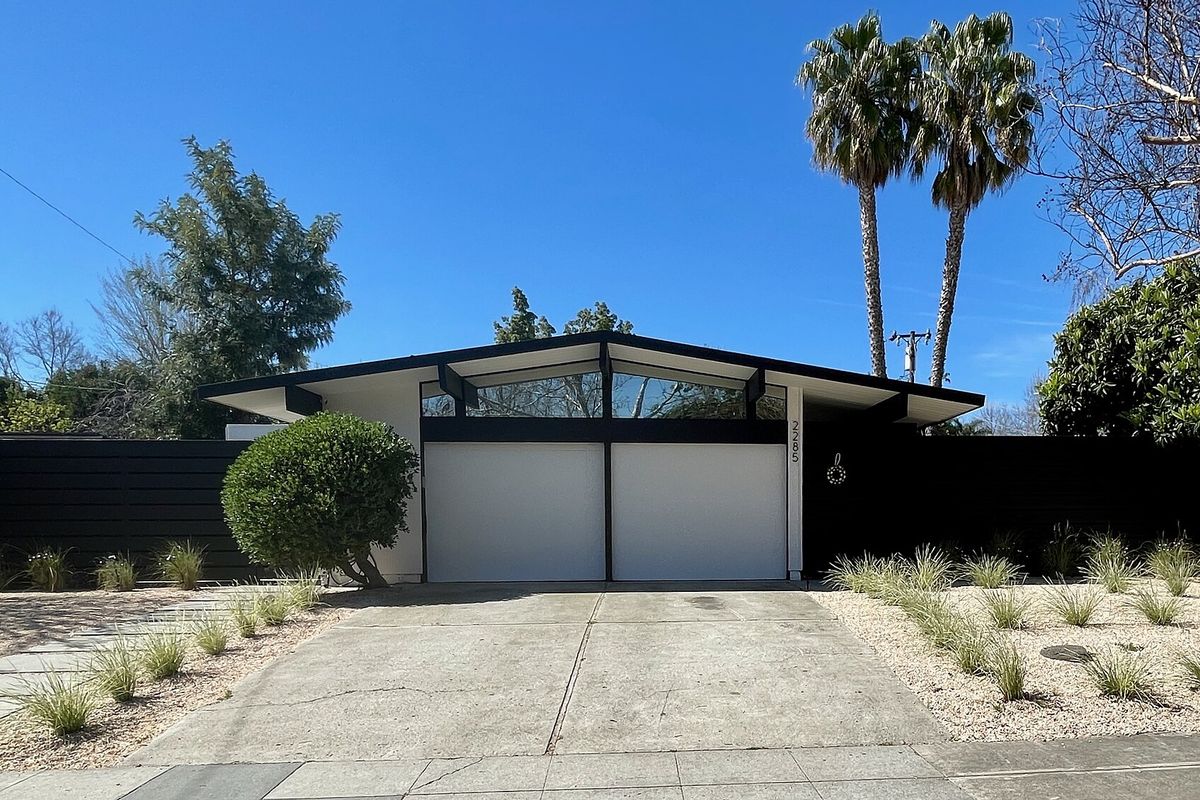
How do the four systems compare?
| Spray foam | Tar and gravel (built-up) | Modified bitumen | Single-ply (TPO) | |
|---|---|---|---|---|
| Surface | Seamless, coated | Gravel over mopped felt | Rolled sheets, lapped seams | Sheets, heat-welded seams |
| Insulation | Built in | Needs board underneath | Needs board underneath | Needs board underneath |
| Over the old roof? | Often | Generally no | Generally no | Often |
| Usual color | Light coating | Dark gravel | Dark or coated light | White or light |
| Life estimate | Depends on recoating | About 30 years | About 20 years | 7 to 20 years |
Tear-off notes are from the Eichler Network. Life estimates are InterNACHI figures. EPDM rubber, another single-ply, is listed at 15 to 25 years.
Spray polyurethane foam
Foam is sprayed onto the roof, where it expands and hardens, then gets a protective coating. Because the cells are closed, the same layer insulates and waterproofs. The Eichler Network reports sprayed foam has about a 20 percent higher R-value than board foam of the same thickness, and its white surface runs far cooler in summer than a dark roof.
Foam can often go over a cleaned and prepared existing roof, which skips tear-off (Eichler Roofing), but not over two existing layers or a water-soaked one (CRC R908). The coating is the maintenance item. Plan on recoating over time.
Built-up tar and gravel
This is what most Eichlers had originally. Installers nail a base sheet, hot-mop layers of felt with asphalt and finish with gravel, which shields the felt from UV and gives the even, dark surface people associate with the houses (Roofing Survival Guide). It's generally the least expensive of the systems before insulation and coatings are added.
The dark surface is the catch. It holds heat, so insulation board underneath is strongly recommended, and in cool-roof climate zones you'll need either a reflective surface or enough deck insulation to satisfy the Energy Code trade-off.
Modified bitumen
Modified bitumen is asphalt with added polymers, rolled out in sheets and torched, mopped or self-adhered. On Eichlers it's often installed as a three-ply system, which generally needs a tear-off (Eichler Network). A light cap sheet or coating can be used where a cool roof is required.
Single-ply: TPO, PVC and EPDM
Single-ply systems such as TPO go down in wide sheets over insulation board, with seams heat-welded (TPO, PVC) or glued (EPDM). White TPO meets cool-roof reflectance easily. Most single-ply systems can go over an existing roof (Eichler Roofing). The Eichler Network notes an insulated single-ply roof is usually the most expensive of the insulated options (Roof Insulation).
Which one fits your roof?
- Hot inland summers (Santa Clara Valley, Walnut Creek, Concord): the reflectance rule applies, so foam or white single-ply are the simple paths. Tar and gravel works with enough insulation under it.
- Climate zone 3 (the Peninsula, San Francisco and Oakland): no cool-roof or insulation mandate, so color is your call. Insulation still pays off in comfort.
- Ponding problems: whichever system you choose, ask how the roofer will get water to the drains. Tapered insulation can add slope.
- You care most about the original look: tar and gravel over rigid foam keeps the dark surface (Eichler Roofing).
Check your zone with the CEC climate zone tool.
Every roofer we work with is licensed and insured.
Book a free roof inspectionFrequently asked questions
Is foam or TPO better for an Eichler?
Neither wins everywhere. Foam has no seams and adds insulation itself. TPO is a reflective sheet that goes over separate insulation board. Ask for both in your bids and compare the insulation value each one includes.
Can I keep a tar and gravel look and still meet the Energy Code?
Often. In climate zones that require a cool roof, the code lets enough deck insulation stand in for reflectance, and with R-24 continuous insulation there's no reflectance requirement (§150.2(b)1I). Your roofer has to show the numbers on the permit.
How long does a foam roof last?
It depends on the coating. The foam is protected by an elastomeric coating that wears and gets recoated, so ask the roofer what recoating schedule they plan for and whether the warranty requires it.
Sources
- Eichler Network: Eichler Roofing
- InterNACHI: Life expectancy of roofing materials
- Eichler Network: Roof Insulation
- California Residential Code R908 (reroofing)
- Eichler Network: Roofing Survival Guide
- 2025 California Energy Code §150.2(b)1I, roof alterations (Energy Code Ace)
- California Energy Commission: Climate zone tool and maps
Sources reviewed November 17, 2026. Confirm permits, design rules and requirements with your contractor and your city or county. This page is general information, not legal or insurance advice.