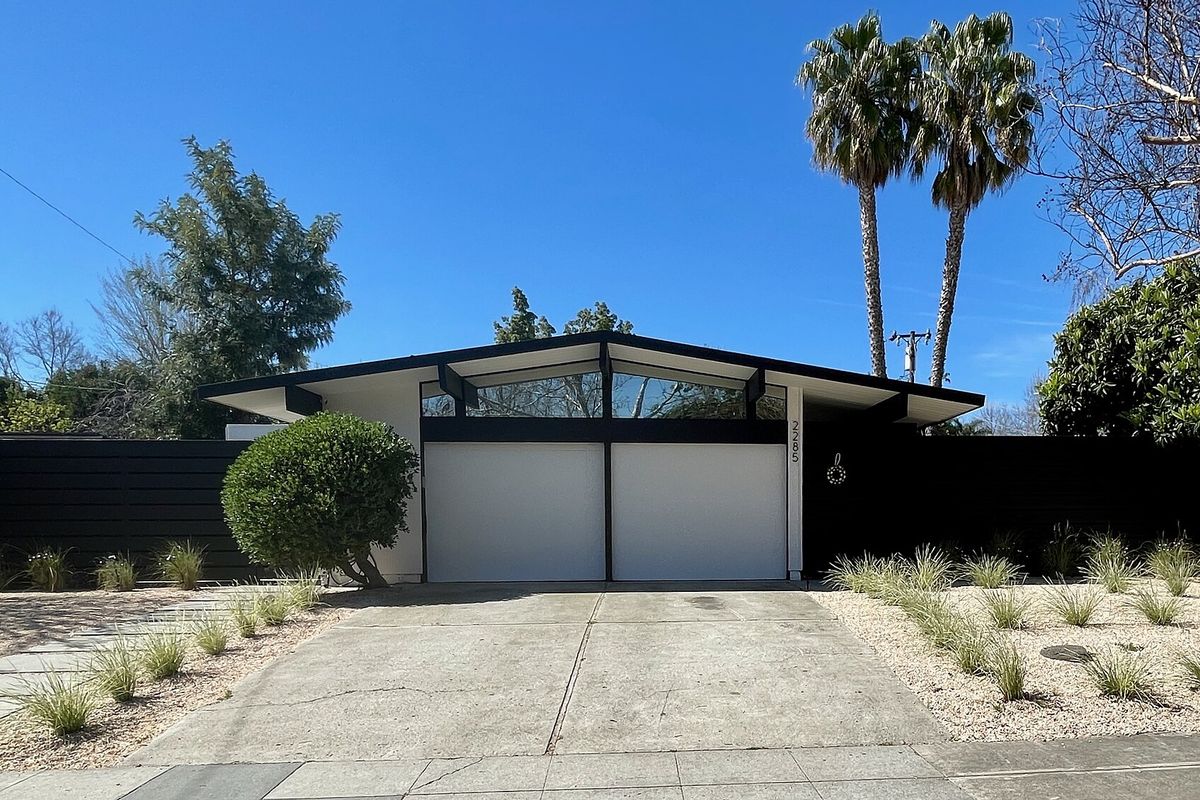
Radiant floor heat
Eichlers were built with hydronic radiant heat: hot water runs through tubing embedded in the concrete slab (Eichler Network). The roof matters to that system in two ways.
- Leaks. The Eichler Network lists roof leaks, along with poor drainage and plumbing leaks, among the wet slab conditions that damage the outside of steel radiant pipes. A roof that drips onto the floor is a heating problem as well as a roofing one.
- Heat loss. With almost no original roof insulation, much of the heat the slab puts out escapes through the ceiling. Adding insulation above the deck during the reroof is the only way to fix that (Roof Insulation).
Air conditioning
Older central systems on Eichlers meant a large box and ductwork on top of the roof. Ductless mini-splits changed that. Each one has an outdoor condenser and indoor units joined by a conduit about three inches across that carries power, refrigerant tubing and a condensate drain, and that conduit can go through the roof or an exterior wall (Eichler Air Conditioning).
If AC is on your list, decide before the reroof:
- [ ] Where the condenser sits (ground or roof).
- [ ] Whether line sets cross the roof, and how they're supported and flashed.
- [ ] Whether any rooftop ducts will be removed. San Rafael's Eichler overlay lists exposed exterior ducting among roof changes that need design review (SRMC 14.14.030).
Wiring and solar
Two other trades usually need the open roof. Original ceiling wiring runs under the roofing (Roofing Survival Guide), and solar panels have to come off for a full reroof. Both have their own guides: wiring and solar on a flat roof.
Order of work
A common sequence: electrician and HVAC rough-in while the roof is open, then insulation and membrane, then solar reinstall and final inspection. Your roofer and the other trades should agree on it in writing before tear-off.
Every roofer we work with is licensed and insured.
Book a free roof inspectionFrequently asked questions
Should the AC line set go through the roof or the wall?
Either works. The Eichler Network notes the conduit can run through the roof or through an exterior wall, and that many owners pick the wall to avoid roof penetrations (Eichler Network). If it crosses the roof, have the HVAC installer and roofer agree on supports and flashing.
Are steel radiant pipes a bigger worry?
Often. Eichler switched from copper to steel tubing by late 1951 during a copper shortage, then went back to copper in the late 1950s. The Eichler Network says copper leaks are mostly repairable, but with steel "the first sign of a leak could forecast the eventual end" of the system (Joint of No Return).
Does a new roof affect radiant heating?
Indirectly. Radiant pipes are in the slab, not the roof, but a better-insulated roof keeps more heat in, and stopping leaks protects the slab (Eichler Network).
Sources
- Eichler Network: Six Myths of Eichler Radiant Heating
- Eichler Network: Roof Insulation
- Eichler Network: Eichler Air Conditioning
- San Rafael Municipal Code ch. 14.14: Eichler and Alliance Homes overlay
- Eichler Network: Roofing Survival Guide
- Eichler Network: Joint of No Return (radiant heat)
Sources reviewed November 17, 2026. Confirm permits, design rules and requirements with your contractor and your city or county. This page is general information, not legal or insurance advice.